
Leap of Faith Track Guide: Asphalt Legends Gauntlet (Himalayas)
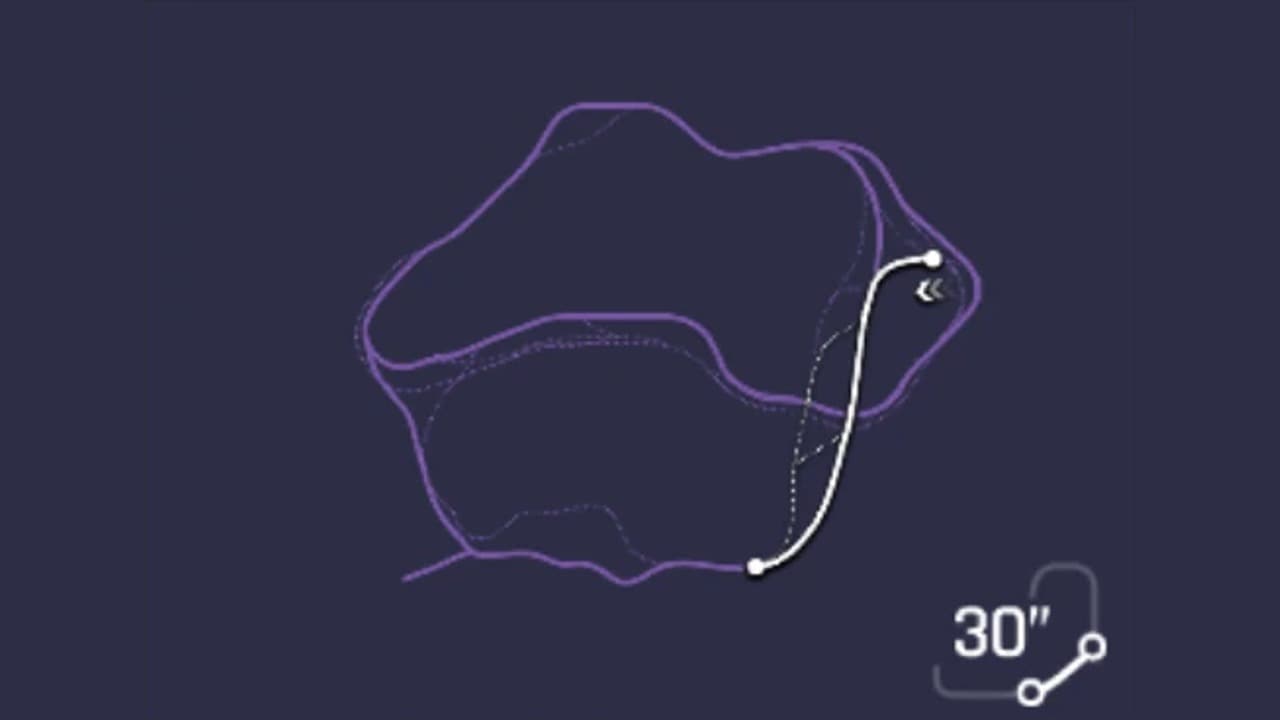 1 Nitro: Standing start on the canyon road2 Drift: The 39-metre drift and the shockwave3 Ramp: The Leap of Faith: 2.6 seconds and three barrel rolls4 Ramp: The landing and the second leap5 Ramp: The third leap over the boulder slope6 Hazard: The breakable barriers at the finish gate
- 1. Standing start on the canyon road
- 2. The 39-metre drift and the shockwave
- 3. The Leap of Faith: 2.6 seconds and three barrel rolls
- 4. The landing and the second leap
- 5. The third leap over the boulder slope
- 6. The breakable barriers at the finish gate
What this track demands
The lap is three leaps: 2.62, 2.48 and 2.88 seconds of air time in an 18.6-second run, with the car reading 554 to 581 km/h at the top of each one. What decides it is how much of that air speed survives each landing, and how quickly the car gets off the line before the first cliff.
- Air and stunts
- 5
- Acceleration
- 4
- Top speed
- 3
- Nitro
- 3
- Handling
- 2
- Drift
- 2
The 30 seconds, beat by beat
The standing start on the canyon road
Standing start on the canyon road
Leap of Faith launches from a dead stop on a wide dirt-and-snow road between rock walls, climbing gently towards a line of white cliffs. There is nothing to steer around: the reference run reads 74 km/h one second in with 0% of the track behind it, 130 km/h at 2%, 175 km/h at 5% and 207 km/h at 9%, four seconds into the lap. In a Class C car that is a long time on a straight road, which is why acceleration outranks top speed on this track. Whatever gap you build here is carried straight to the cliff edge.
The 39-metre drift and the shockwave
The 39-metre drift and the shockwave
Around 13% the road bends left onto a snow shelf and the reference run starts its only real drift, 9 metres growing to 39 metres between 13% and 17% while the speed sits at 211 to 212 km/h. The slide is there to fill the bar, not to make the corner, and the run spends it immediately: a nitro shockwave fires at 21% and the car goes from 275 km/h there to 315 km/h at 24% and 327 km/h at 26%, running flat out towards a cliff edge with a temple roof visible beyond it. That 327 km/h is the entry speed for the leap.
The Leap of Faith
The Leap of Faith: 2.6 seconds and three barrel rolls
A small hop off a rock outcrop at 31% puts the car in the air for 0.53 seconds at 337 km/h, and then at 37% the road simply ends. The reference run is doing 400 km/h as it leaves the mountain, reads 461 km/h at 40% with two barrel rolls done, and 554 km/h at 43% with the third, falling past a monastery on the hillside. The counter stops at 2.62 seconds of air time and the car touches down just before 50% at 505 km/h. The barrel rolls refill nitro and are worth doing, but only if the third one finishes before the ground arrives.
The landing and the second leap
The landing and the second leap
Touchdown at 50% reads Perfect Run on the HUD, and the car is airborne again almost at once: 0.22 seconds of fresh air time at 50%, 0.72 seconds at 53% and 523 km/h, because the landing is on a raised causeway that launches the car straight into the second leap. This one is longer and faster than it looks: 559 km/h with 1.22 seconds of air at 57%, 581 km/h with 2.23 seconds at 66%, 2.48 seconds in total, passing a walled temple complex on the way down. The run lands at 69% at 502 km/h. Landing the first leap straight is what makes this one clean.
The third leap over the boulder slope
The third leap over the boulder slope
The second landing barely counts as ground. The reference run reads 501 km/h and 0.61 seconds of air at 72%, 540 km/h at 76%, 559 km/h at 80% and 581 km/h at 89%, the counter climbing the whole way to 2.88 seconds, the longest of the three leaps. Below it is a snow slope scattered with boulders, and the car clears all of it in the air, touching down around 91% at 495 km/h. There is no input to make here beyond keeping the car level; the leap is decided by the speed and the angle it was entered with at 69%.
The breakable barriers at the finish gate
The breakable barriers at the finish gate
The last 8% is the only part of the lap that costs speed. Out of the third landing the reference run reads 494 km/h at 92%, takes a 5-metre drift down to 479 km/h at 94%, and then hits the finish gate, where breakable barriers stand across the road: 427 km/h at 96% with two obstacles destroyed, 373 km/h at 99% with three, and 18.599 on the clock at the line. That is 120 km/h shed in the final second. Arriving on line, so the car punches through the barriers square rather than clipping them, is the last thing the lap asks.
Where the run is won
- Landing straight three times. The reference run reads 505, 502 and 495 km/h on its three touchdowns and is airborne again within a second of the first two, so a crooked landing does not cost one leap, it costs the entry speed of the next one as well.
- The launch. The first 9% takes four seconds in the reference car, longer than any single leap, and there is nothing on that canyon road except acceleration. It is the one stretch where a faster car pulls a gap that the air cannot give back.
What wrecks a run
- Still rolling when the ground arrives. Three barrel rolls on the first leap refill the bar, but a roll that is not finished before touchdown turns the Perfect Run at 50% into a spin at 505 km/h, and the second leap launches at whatever speed is left.
- Firing the shockwave late. The reference run spends it at 21%, on the ground, which is what turns 275 km/h into 327 km/h at the cliff. Fired in the air it changes nothing, because the game is already reading the car at over 500 km/h.
- Drifting past the 39 metres the bend needs. The slide at 13 to 17% is there to fill the bar for the shockwave; holding it longer only scrubs the speed the leap is waiting for.
- Arriving at the finish gate off line. The run sheds 120 km/h through the breakable barriers in the last 8% even when it hits them square. Clip them side-on and the lap ends against the wall instead of across the line.
Which car to bring
Read this track the way our car stats guide suggests: count the places the layout forces you to slow down, then look at what it gives you back. Leap of Faith forces it twice (the standing start and the barriers at the finish gate) and in between it hands you three leaps totalling nearly eight seconds of air, during which the game reads the car at 554 to 581 km/h whatever its top speed rating says.
In priority order: air handling first, because more than 40% of the lap is spent off the ground and a car that flies level lands straight, which is the whole game here. Acceleration second, because the first 9% takes four seconds in the reference car and it is the only place on the track where a faster car opens a gap the leaps cannot close. Nitro third, for the one shockwave that sets the entry speed to the first cliff. Top speed and handling are the stats you can compromise on: there is a single 39-metre drift, no traffic, and no straight long enough for a top-speed ceiling to matter before the ground drops away.
The reference run is the clearest evidence for that ordering. It was set in a BMW 3.0 CSL Hommage, a low Class C car the wiki describes as fairly average with a rather low top speed for its class, but one that supports EVO Tuning, and the wiki notes that a Max Speed Aero Pack raises its airspeed to over 500 km/h. The run reads 554 km/h and 581 km/h at the top of the leaps, and finishes within half a second of a Bugatti Chiron. On a track this airborne, that pack is worth more than a class jump.
One consequence worth being straight about. Your Gauntlet division is set by the combined rank of your top five cars, and rank leans heavily on top speed, so a modest Class C car that suits Leap of Faith also keeps your division down. The times attached to some picks are laps other players have posted, included so you can tell whether your own run is close. They are not targets, and none of them is a time we set.
Hyundai IONIQ 5 N
StarterClass D · Gauntlet Market, Division I
The cheapest car in the Gauntlet Market and the usual way into the mode at all. Its strength is acceleration and low rank, which covers the standing start and keeps your division down. The three leaps will carry it as far as they carry anything, but without an aero pack it will land slower than the reference car and lose the finish straight.
BMW 3.0 CSL Hommage
StarterClass C · Career Chapter 2 (guaranteed unlock); card packs and the Legend Store
Reference run: 18.599 — Allen Chou reference run
The car this entire guide was read from, and the best argument for the track profile: a low Class C car the wiki calls fairly average, with a rather low top speed for its class, that supports EVO Tuning. The wiki notes that a Max Speed Aero Pack pushes its airspeed past 500 km/h, and the run below reads 554 to 581 km/h at the top of each leap. Maxed at rank 1,826 and EVO-tuned to 2,451 in the run, it finished within half a second of a Bugatti Chiron.
Aston Martin DBS 770 Ultimate
StarterClass B · Gauntlet Market, Division II (900 blueprints)
The cheaper of the Division II market cars and a sensible first blueprint target if you are past the IONIQ. On this track the step up buys a quicker launch off the line rather than anything the leaps care about, so weigh it against putting the same effort into an EVO pack for a Class C car you already own.
Lamborghini SC18
MidClass A · Gauntlet Market, Division III (2,100 blueprints)
A lot of nitro for a Class A car, which suits a lap where the single shockwave at 21% sets the entry speed for the first cliff and the barrel rolls keep the bar topped up after it. The right mid-tier car for learning where each leap lands you, and one that keeps the Division III roster within reach.
FV Frangivento Sorpasso GT3
MidClass S · Gauntlet Market, Division IV (2,200 blueprints)
The cheaper of the two blueprint cars in the Division IV market, and the step where the launch stops being a handicap. A reasonable target if you are grinding Gauntlet currency and want a Class S car without saving for the Division V roster, on a track where Class S mostly buys you the first four seconds.
Czinger 21C
HighClass S · Special Event car, also offered in the Stars and Stripes Reignited event
Reference run: 18.3 — Rival reference run
The wiki describes it as having great acceleration, a short but powerful nitro, and a top speed that is low for its rank, and calls it a competitive car for Gauntlet. It also notes the car cannot perform floaty or punch drifts, which matters on longer tracks and not at all here, where the only drift is 39 metres long. The profile fits Leap of Faith almost exactly: the launch and the shockwave are what it is good at.
Bugatti Chiron
HighClass S · In the game since launch; card packs and events
Reference run: 18.166 — QuanTheAznPoop reference run
The fastest of the three cited runs. The wiki rates its stock acceleration at 77.5 and its handling at 38.75 with stiff steering that loses speed in corners and on rough surfaces, and on most tracks that handling figure is the catch. Leap of Faith has one bend and spends the rest of the lap in the air, so the Chiron gets to use its launch and its 420 top speed rating and never has to pay for the steering.
These are examples of the profile, not a ranked list. The method behind them is in how Asphalt Legends car stats actually work.
Frequently Asked Questions
- How long is Leap of Faith in Asphalt Legends?
- It is one of the two 30-second (30") Himalayas variations used in Gauntlet, alongside Freefall. The reference runs we cite finish it in 18.166 to 18.599 seconds, and more than eight of those seconds are spent in the air.
- Where is Leap of Faith won and lost?
- On the landings and at the start. The reference run touches down at 505, 502 and 495 km/h from its three leaps and is airborne again within a second of the first two, so a crooked landing costs the next leap its entry speed. Before any of that, the first 9% of the track takes four seconds of pure acceleration, longer than any single leap.
- What kind of car is best for Leap of Faith?
- Air handling first, acceleration second, nitro third. Top speed and handling matter least: there is one 39-metre drift, no traffic, and no straight long enough for a top-speed ceiling to matter before the road drops away. The reference run was set in a Class C BMW 3.0 CSL Hommage with an EVO aero pack and finished within half a second of a Bugatti Chiron.
- Why does a Class C car read 580 km/h on Leap of Faith?
- Because it is falling. The game reads the car's speed through the air, and on the leaps that number climbs well past what the car can do on the ground: the reference BMW peaks at 554 km/h on the first leap and 581 km/h on the second and third. The wiki notes that a Max Speed Aero Pack raises this car's airspeed above 500 km/h, which is exactly the stat this track rewards.
- Do you have to do the barrel rolls on Leap of Faith?
- No. The reference run throws three on the first leap, and each one refills nitro, but the rolls are a choice and landing straight is not. A roll that is still going when the ground arrives at 50% turns a perfect landing into a spin at 505 km/h. Land flat first and add rolls once the landing is reliable.
- Can you get a good Leap of Faith time with an earnable car?
- Yes, and the best example is the reference run itself: an 18.599 in a BMW 3.0 CSL Hommage, a Class C car guaranteed from Career Chapter 2. The Hyundai IONIQ 5 N at Division I and the Lamborghini SC18 at Division III of the Gauntlet Market are cheaper rungs on a ladder that, on this track, mostly buys you a quicker first four seconds.
- Is Leap of Faith an air track or an acceleration track?
- Both, in that order. Three leaps of 2.62, 2.48 and 2.88 seconds make up more than 40% of the lap, and how straight the car lands each time is the biggest single factor. Acceleration comes next because the only place on the track where a faster car opens a gap the leaps cannot close is the four-second launch on the canyon road.
Sources
- Asphalt Wiki - Himalayas (track variants and route maps)
- Asphalt Wiki - Gauntlet (format, divisions, Gauntlet Market)
- Reference run - BMW 3.0 CSL Hommage, 18.599 (Allen Chou)
- Reference run - Bugatti Chiron, 18.166 (QuanTheAznPoop)
- Reference run - Czinger 21C, 18.3 (Rival)
- Asphalt Wiki - BMW 3.0 CSL Hommage
- Asphalt Wiki - Bugatti Chiron
- Asphalt Wiki - Czinger 21C